
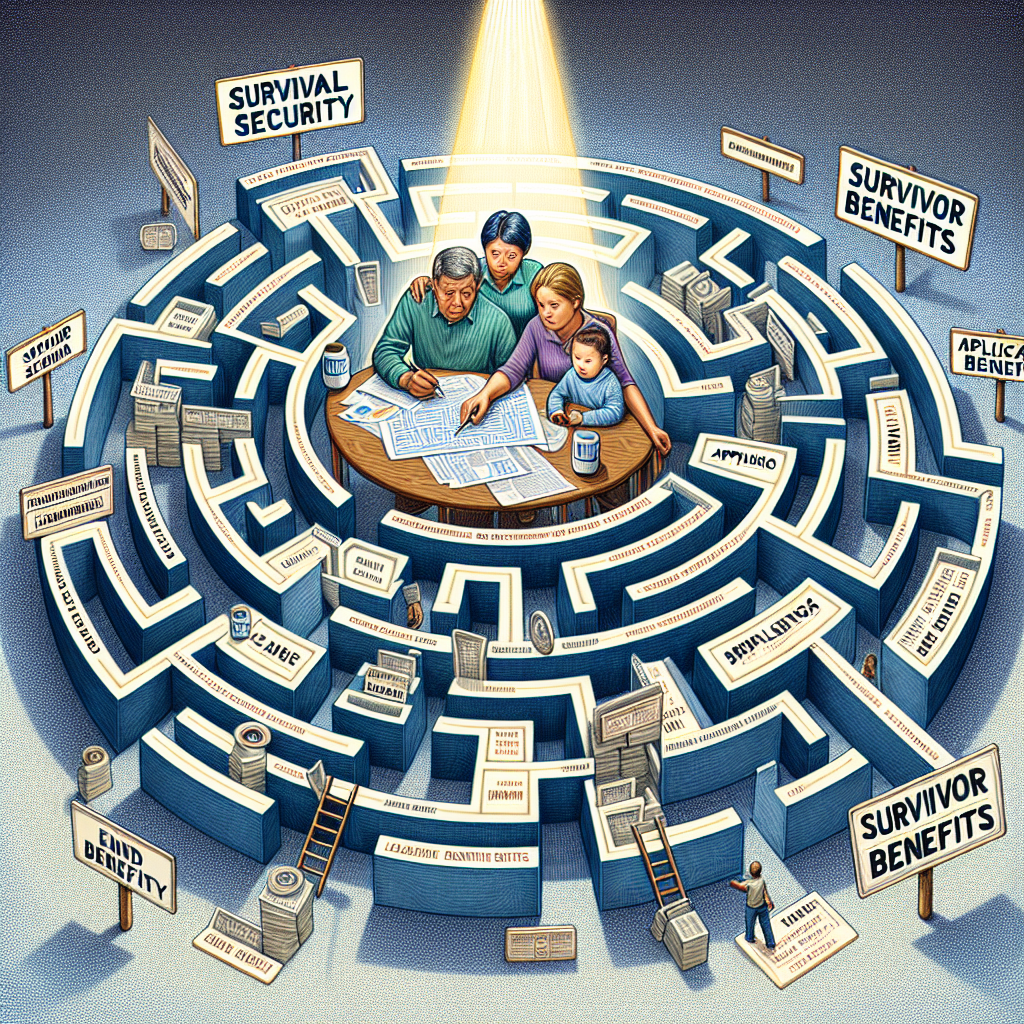
Social Security Survivor Benefits: What You Need to Know
Social Security Survivor Benefits are an essential safety net for families who have lost a breadwinner. Understanding the complexities of these benefits can be challenging, yet it is crucial to ensure that your family is financially protected after a loved one’s death. In this blog post, we will delve into the intricacies of Social Security Survivor Benefits, explain who is eligible, how benefits are calculated, and the application process. A comprehensive understanding of these benefits can help you better plan for the future and secure your family’s financial well-being.
What are Social Security Survivor Benefits?
Social Security Survivor Benefits are monetary payments provided by the Social Security Administration (SSA) to the family members of a deceased worker who had earned enough Social Security credits. The intent is to offer financial support to families during a difficult time, ensuring they can meet their basic needs despite the loss of income.
Eligibility for Survivor Benefits
Widows and Widowers
The primary recipients of Social Security Survivor Benefits are widows and widowers. The rules for eligibility can vary based on age, health status, and whether the widow or widower is caring for the deceased worker’s child.
- Age 60 or older: Widows and widowers can start receiving reduced benefits as early as age 60. If they wait until their full retirement age, they may receive 100% of the deceased worker’s benefit amount.
- Ages 50-59 and disabled: If a widow or widower is disabled, they may begin receiving benefits as early as age 50.
- Any age and caring for a child: Widows and widowers caring for the deceased worker’s child who is under 16 or disabled can receive benefits at any age.
Children
Biological and adopted children, as well as dependent stepchildren and grandchildren, can also qualify for survivor benefits. They must be:
- Unmarried and under the age of 18, or
- Unmarried and between ages 18 and 19 but still in elementary or secondary school, or
- Over 18 and disabled if the disability occurred before they turned 22.
Other Eligible Family Members
Other family members who may qualify for survivor benefits include:
- Parents: Dependent parents aged 62 or older may be eligible if they were receiving at least half of their support from the deceased worker.
- Divorced spouses: An ex-spouse can receive survivor benefits if the marriage lasted at least 10 years and the individual is not remarried before the age of 60 (or 50 if disabled).
How Survivor Benefits are Calculated
Social Security Survivor Benefits are calculated based on the deceased worker’s earnings over their lifetime. The more the worker paid into Social Security, the higher the benefits for the surviving family members. The basic steps involved in calculating survivor benefits are:
- Determine the Primary Insurance Amount (PIA): The SSA calculates the deceased worker’s PIA, which is the amount the worker would have received at full retirement age.
- Determine the Benefit Amount: The survivor benefits are a percentage of the deceased worker’s PIA. This percentage varies depending on the survivor’s relationship to the deceased and their age.
Percentage of PIA for Survivors
- Widows and widowers at full retirement age: 100%
- Widows and widowers aged 60 to full retirement age: 71.5% to 99%
- Disabled widows and widowers aged 50-59: 71.5%
- Widows and widowers caring for a child under 16 or disabled: 75%
- Children: 75%
- Dependent parents: 75% (one parent) or 82.5% each (both parents)
There is also a maximum family limit, which generally ranges between 150-180% of the deceased worker’s PIA. If the total amount payable to all family members exceeds this limit, each person’s benefit is proportionally reduced.
Applying for Survivor Benefits
The process for applying for Social Security Survivor Benefits can be time-sensitive and requires specific documentation. Here is a step-by-step guide on how to file:
- Notify the SSA: Contact the SSA immediately after the death of a worker to report it. Call their toll-free number at 1-800-772-1213 or visit your local Social Security office. It’s crucial to make this notification swiftly to avoid delays in benefits.
- Gather Required Documents: Collect essential documents including the deceased worker’s Social Security number, proof of death, survivors’ Social Security numbers, proof of relationship (e.g., marriage certificate, birth certificates for children), and your bank account details for direct deposit.
- Complete the Application: Either apply online via the SSA’s website or make an appointment at a local SSA office to complete the application in person.
Common Pitfalls and How to Avoid Them
Navigating through Social Security Survivor Benefits can be tricky, and it’s easy to make mistakes. Here are some common pitfalls and tips on how to avoid them:
Not Applying Promptly
Delaying the application for survivor benefits can result in loss of benefits. It’s particularly important to note that some benefits can be retroactive, but only up to six months.
Incorrect or Missing Documentation
Submit accurate and complete documentation to prevent delays or denial of benefits. Double-check all forms and gather all required documents before beginning the application process.
Misunderstanding Eligibility Criteria
Ensure you fully understand the eligibility requirements for surviving family members. Consult SSA resources or speak with a representative to clarify any doubts.
Conclusion
Social Security Survivor Benefits provide essential financial support to families who have lost a loved one. Understanding the eligibility criteria, how benefits are calculated, and the application process can help ensure that you and your family receive the maximum benefits available.Clearly, navigating these benefits can be complex, but with the right knowledge and preparation, you can secure your family’s financial future during such a challenging time.
For more detailed information, visit the Social Security Administration’s official website or contact their customer service for personalized assistance. Remember, being well-informed ensures that you make the best decisions for your financial well-being after a significant loss.